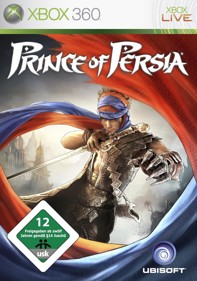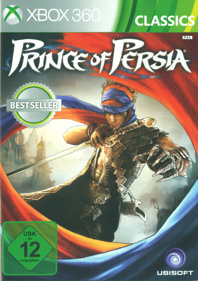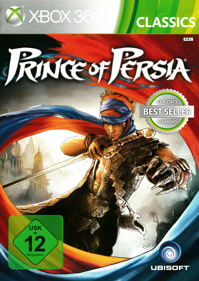

Overview
Prince of Persia is a 2008 action-adventure game developed by Ubisoft Montreal and published by Ubisoft. It is the seventh main installment in the Prince of Persia franchise, and the second reboot, establishing a new continuity that is separate from other games in the series. It was released in the United States on December 2, 2008, for PlayStation 3 and Xbox 360, and on December 9 for Windows. It was released on March 24, 2009, for Mac OS X via the Cider engine. The game was also released on November 11, 2008, by Gameloft for mobile phones that runs on the Java platform in a 2D environment, and has a feature of enabling the players to control a second character at certain points of the various levels of the game.
The game is set in ancient Persia, and follows an unnamed player-character, who finds himself in a mysterious land after a large sandstorm diverted him from his course. Here, he meets a princess named Elika, and must work with her to re-imprison the evil entity Ahriman, who has corrupted the land after being released by Elika's father. Throughout the journey, players traverse many different environments using their acrobatic abilities to scale walls and even crawl on the ceilings, and combat various enemies. The game's storyline and setting borrowed some aspects from Zoroastrianism.
Prince of Persia received generally positive reviews from critics, and has sold over 2.5 million copies as of November 2009. An expansion pack that serves as an epilogue to the story was released in March 2009. The only other game in the series set in this continuity is Prince of Persia: The Fallen King, also released in December 2008 for the Nintendo DS.
Gameplay
Prince of Persia revolves around gameplay mechanics that producer Ben Mattes identifies as "pillars" of the Prince of Persia series; an acrobatic hero exploring a Persian environment with a balanced mixture of acrobatics, combat, and puzzle-solving. The premise of Prince of Persia is that the player travels around the game world to heal specially designated spots of land. The player assumes the role of the acrobatic character, and is accompanied by the AI-controlled companion named Elika. The player can use the Prince character's acrobatic prowess, sword, and gauntlet, as well as magic from Elika to perform combat and acrobatic feats variously throughout the game.
Prince of Persia features open world exploration that allows the player to travel to any spot in the game world at any given point, and allows the player to witness the plot in any way they want. Depending on how the player progresses, previously visited areas will become more challenging to traverse when the player re-visits them. When the player heals a spot of land, it becomes devoid of traps. The traps are manifested in various forms of the antagonist Ahriman's Corruption; black-colored blobs that coat the land and swallow the player if touched. The player can use acrobatic maneuvers to avoid these traps.
The player has many acrobatic maneuvers at their disposal. Acrobatics are also used in combat to vault over enemies, or hit them into the air. Sometimes when performing these acrobatics, the player is aided by Elika. There are magical plates that allow the player to perform even more complicated acrobatic feats via Elika. If the player fails to signal Elika's magic, they fall off of the plate, sometimes to their death.
The player cannot conventionally "die" in Prince of Persia. Rather, when an enemy is about to strike the finishing blow, or The Prince presumably falls to his death, Elika saves him. There is no limit on the number of times Elika can save a player, although an achievement is awarded for being saved fewer than 100 times during a playthrough. Along with saving the player, Elika can perform many acrobatic feats or combat feats in tandem with the player. The downloadable content Epilogue added a new magic plate that allows Elika to recreate destroyed objects. A new combat maneuver for the player was also added.
- Developers
- Ubisoft Montreal
- Publishers
- Ubisoft
- Platform
- Microsoft Xbox 360
- Alternate Names
- No information available